Neil Armstrong, First Man
Born on this date, a tribute to the first human being to step on the lunar surface.

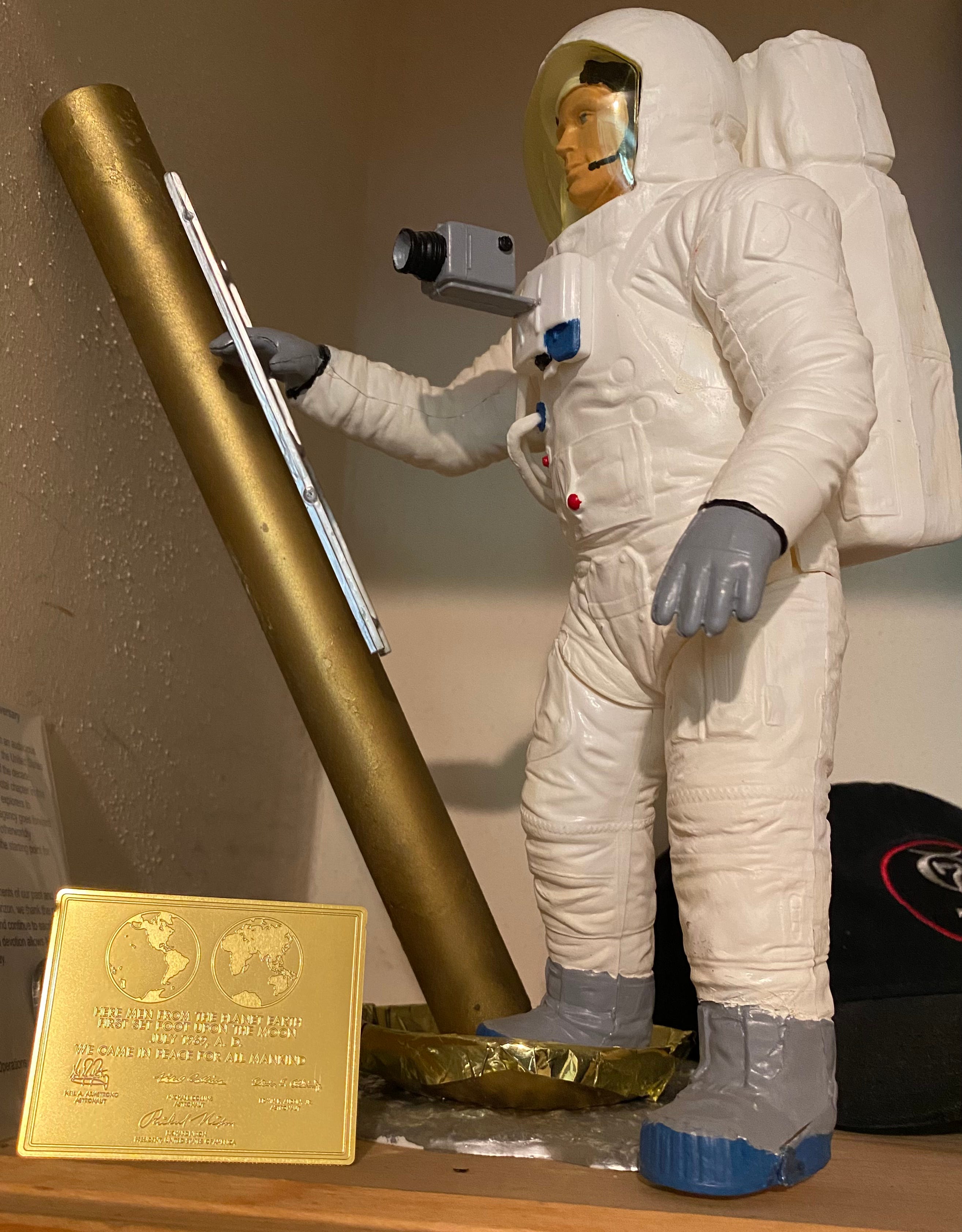
Neil Alden Armstrong, who died unexpectedly in August 2012 from complications following heart bypass surgery, was largely misunderstood.
I should know, having added to the myth that Armstrong was a recluse by writing this too-clever-by-half story lead.
In truth, the first human to walk on the Moon did all that was asked of him by his country while striving to preserve some semblance of a private life. Clowns like me would be pestering him constantly for interviews to talk about himself, something Neil Armstrong simply did not care to do. After walking on the Moon in July 1969, everyone, it seemed, wanted a piece of Neil Armstrong. After returning from overseas several years back, Armstrong’s signed customs declaration ended up for sale on eBay.
Uninterested in a self-promotion, the aeronautical engineer and first-rate test pilot understood that he was part of a technological continuum, and had happened along at precisely the right time (1930) and place (Ohio, a cradle of aviation and aerospace research).
Neil Armstrong’s public addresses were always laced with references to the giants of aviation and rocketry on whose shoulders he stood: the Wright Brothers, Robert Goddard, Yuri Gagarin.
How does one get on with a normal life having just set his left foot on another heavenly body, then looked up to see the whole circle of the Earth? This was Armstrong’s burden, and he carried it always with grace and dignity.
Like most of the astronauts, Neil Armstrong was born to fly. His awe of flight soon took him to the edge of space as a test pilot flying the X-15 rocket plane. His single-minded focus on advancing the frontiers of flight sharpened following the 1962 death of his infant daughter, Karen, from an inoperable brain tumor. He came to view spaceflight not as a race to the Moon but rather a chance to fly in “a completely new medium.”
His description of the test pilot’s job, taken from a 2011 interview, illustrated Neil Armstrong’s precision and his passion for advancing knowledge:
“The test pilot is solving problems,” Armstrong told the interviewer. “He’s looking for inadequacies, or shortcomings, or barriers to substantial safety at increasing performance in flight. And his job is to identify those problems and assist in finding a solution. So it’s a problem-solving job, and you’re always working with the unknowns. I found that a fascinating part of my career path.”
Once accepted into the astronaut corps, Neil Armstrong soon impressed everyone he met with his probing questions about the intricacies of spaceflight. In his book, Engineering the Space Age, Air Force rocketeer Robert Brulle, recalls a telling scene during an early NASA meeting: “We were bombarded by questions from the NASA attendees. Some were obviously trivial and were asked so the person could get his name printed in the conference minutes. However, I noted one individual [who] asked some very deep, understanding questions that required careful thought-out answers.”
Brulle later asked NASA officials who the individual was posing the tough questions. “It was obvious from their answer that they also thought very highly of him. It was Neil Armstrong, and I was introduced to him during the afternoon break. He clearly lived up to my initial appraisal.”
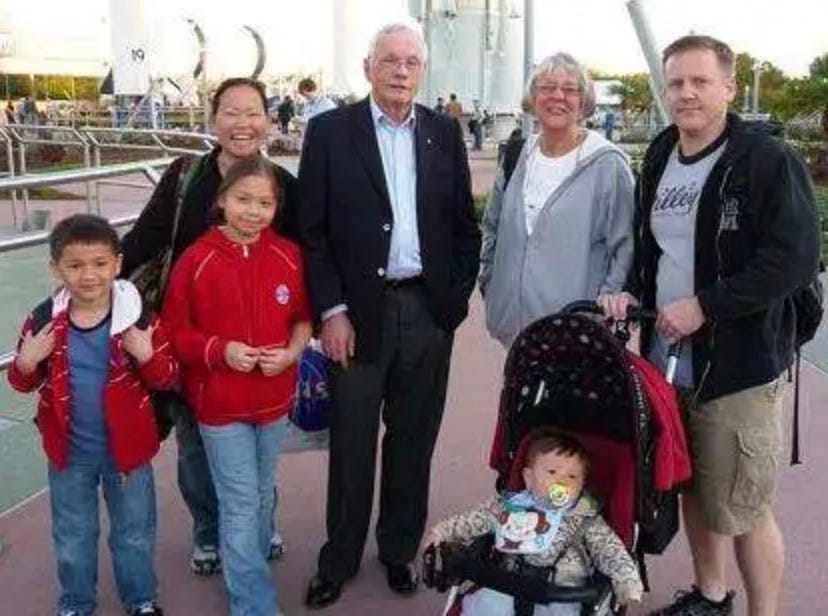
If he could leave us with just one more thought before passing, Neil Armstrong might have repeated his understated reply to his Apollo 11 crew mate Michael Collins after Armstrong and Buzz Aldrin embarked in their lunar module on the treacherous final 47,000 feet to the Sea of Tranquility. Staring out the window of the command module at the lonely little machine, appearing even more fragile against the blackness of the universe, Collins bid his crew mates a safe trip, ending with, “You guys take care.”
The Apollo 11 commander replied simply, “See you later.”
At the time of his death on August 25, 2012, Neil Armstrong of Wapakoneta, Ohio, was 82.